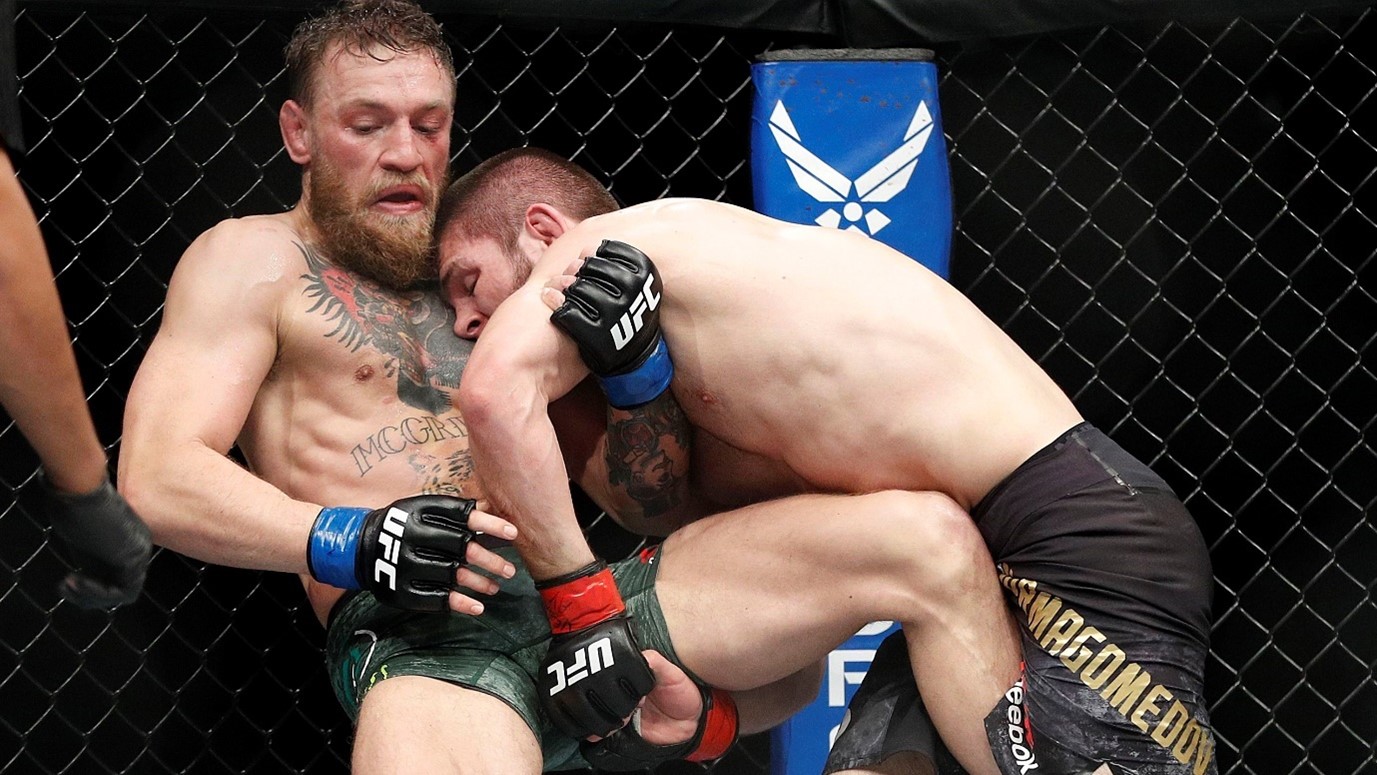
UFC Through the Numbers: An Analytical Retrospective on MMA's Evolution
2025-10-19
Welcome to the inaugural post of The Sporting Analyst, where we delve into the numbers and narratives that define the electrifying world of competitive sports. In this first edition, we embark on a journey through the evolution of the Ultimate Fighting Championship (UFC), tracing its transformation from a fledgling organization to a global powerhouse. We'll explore how the sport has changed over the years, examining the rise in match frequencies, the shifts in fight outcomes, and the strategies that have redefined the octagon. Join us as we kick off this analytical adventure, spotlighting the milestones that have made the UFC an unparalleled phenomenon in the world of mixed martial arts.
What is the UFC and MMA?
A good starting point for the uninitiated is to provide a brief description of the UFC and some key dates in the organizations journey. The Ultimate Fighting Championship, or UFC, is the premier organization in mixed martial arts (MMA), a full-contact combat sport that allows fighters to use techniques from various martial arts disciplines. Mixed martial arts is exactly what it sounds like: a mix of various fighting styles. Fighters compete in an octagon-shaped cage, using a combination of striking (punches, kicks, elbows, knees) and grappling (wrestling, jiu-jitsu, judo) techniques. The goal is to either knock out the opponent, submit them (make them tap out due to a hold), or win by decision based on judges' scoring if the fight goes the distance.
Key Dates in the History of the UFC
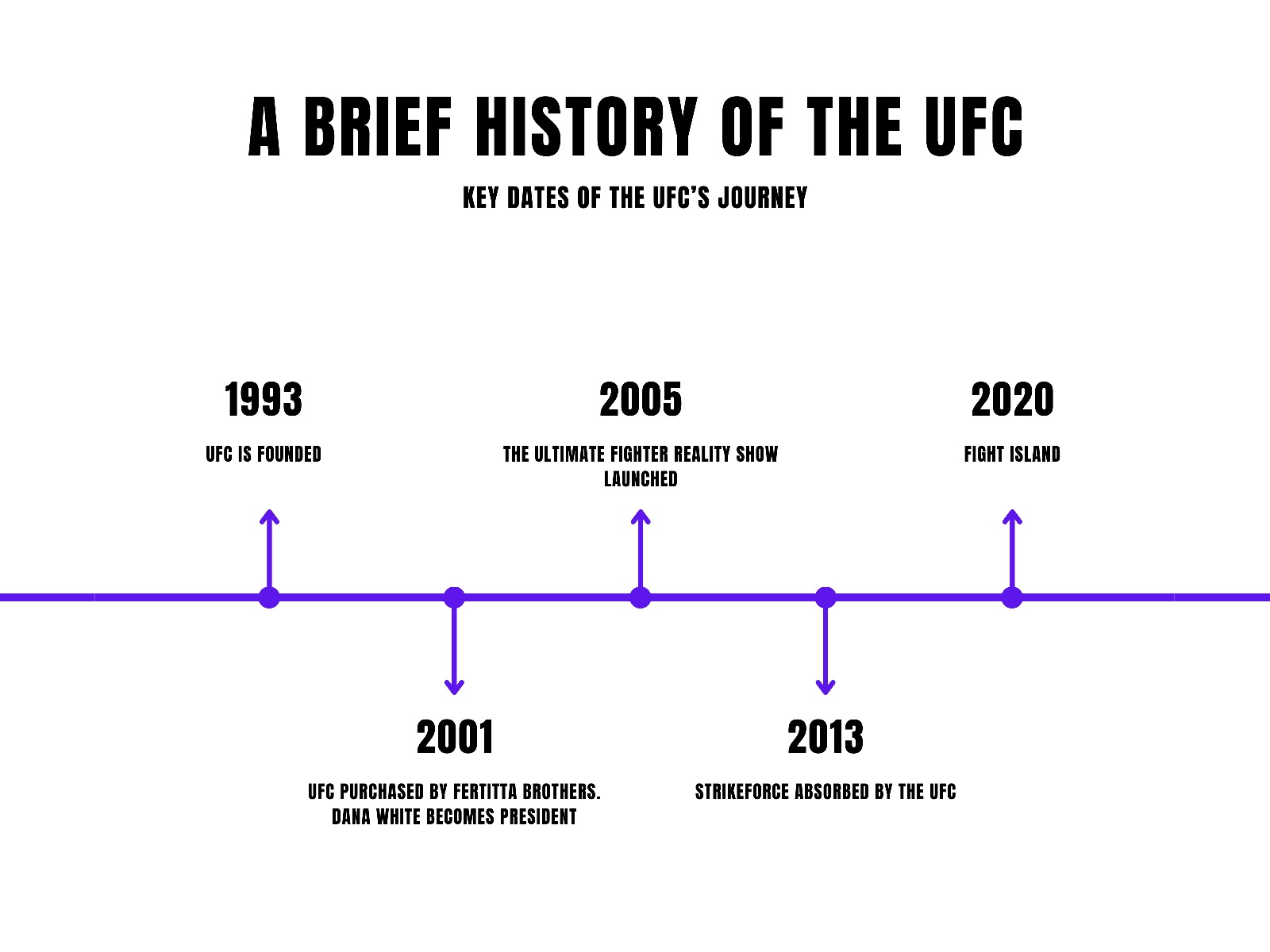
Now we have introduced the UFC lets look at some of the key dates.
1993: The inception of the UFC! Founded by Art Davies and Rorion Gracie, part of the legendary Gracie Brazilian Jiu Jitsu (BJJ) family. Rorion hoped the UFC would help answer the age-old question of which martial art was superior and, in the process, prove the effectiveness of BJJ and that the best BJJ fighters where Gracie’s.
2001: In January 2001, the UFC was purchased by the Fertitta brothers, with their business partner Dana White taking the helm as president. Their initial strategy centred on securing state sanctioning, investing heavily in advertising, and making a determined effort to break into mainstream TV .
2005: In 2005, the launch of The Ultimate Fighter (TUF). A reality TV following prospect MMA fighters who competed to a contract in the UFC. The show was an instant success and propelled the UFC's popularity to new heights.
2013: In 2013, the UFC absorbed Strikeforce. Strikeforce was a competitor promotion that the UFC purchased in 2011 but the promotion continued to operate independently to the UFC. However, in 2013 the decision was made for the Strikeforce roster to be absorbed into the UFC providing a new depth to the UFC roster.
2020: Like most professional sports the UFC were impacted by the Covid-19 restrictions and had several fights postponed due to the restriction. To continue to schedule fights the UFC secure a private island to host fights, which later became known as ‘Fight Island’ and was one of the only professional sports organizations that continued to run over this period until professional sports were deemed as an ‘essential service’.
The Growth of MMA & The UFC

Our first stop in exploring the evolution of the UFC is to observe the frequency of fights the promotion held each year. When we combine this graph with some of background information provided in the previous section this graph provides some interesting insights into the growth of the sport.
Early Days 1993 – 2004:
In the early days from 1993 to 2004, the UFC hosted only a handful of events each year, as shown in the graph. Despite the intense and raw excitement these bouts offered, the UFC struggled to break into the mainstream. This struggle was largely due to its inability to acquire athletic sanctioning, which kept the sport on the fringes and limited its growth and acceptance in the wider sports community.
The Ultimate Fighter 2005:
Due to the instant popularity of The Ultimate Fighter the number of events between 2005 and 2006 nearly doubled with a staggering 97.5% increase and continued to grow steadily. By 2013, the number of fights had skyrocketed by an impressive 482.5%, reflecting the UFC's rapid expansion and increasing popularity among fight fans around the world.
Strikeforce 2013:
In 2013, the UFC absorbed Strikeforce, a competitor promotion, along with all their fighters. This strategic move significantly enhanced the depth of the UFC roster, allowing for a wider array of matchups and increased competition within the organization. As a result, the UFC was able to increase the frequency of its events by 30% year on year, offering fans more action-packed fights and further solidifying its dominance in the world of mixed martial arts.
Fight Island:
The effects of COVID-19 restrictions led to a drop in fights in 2020. However, the number of events remained high, thanks in part to the inception of Fight Island and professional sports being deemed an ‘essential service’. This allowed the UFC to continue hosting events and delivering action to fans despite the global pandemic.
How fights finish over time
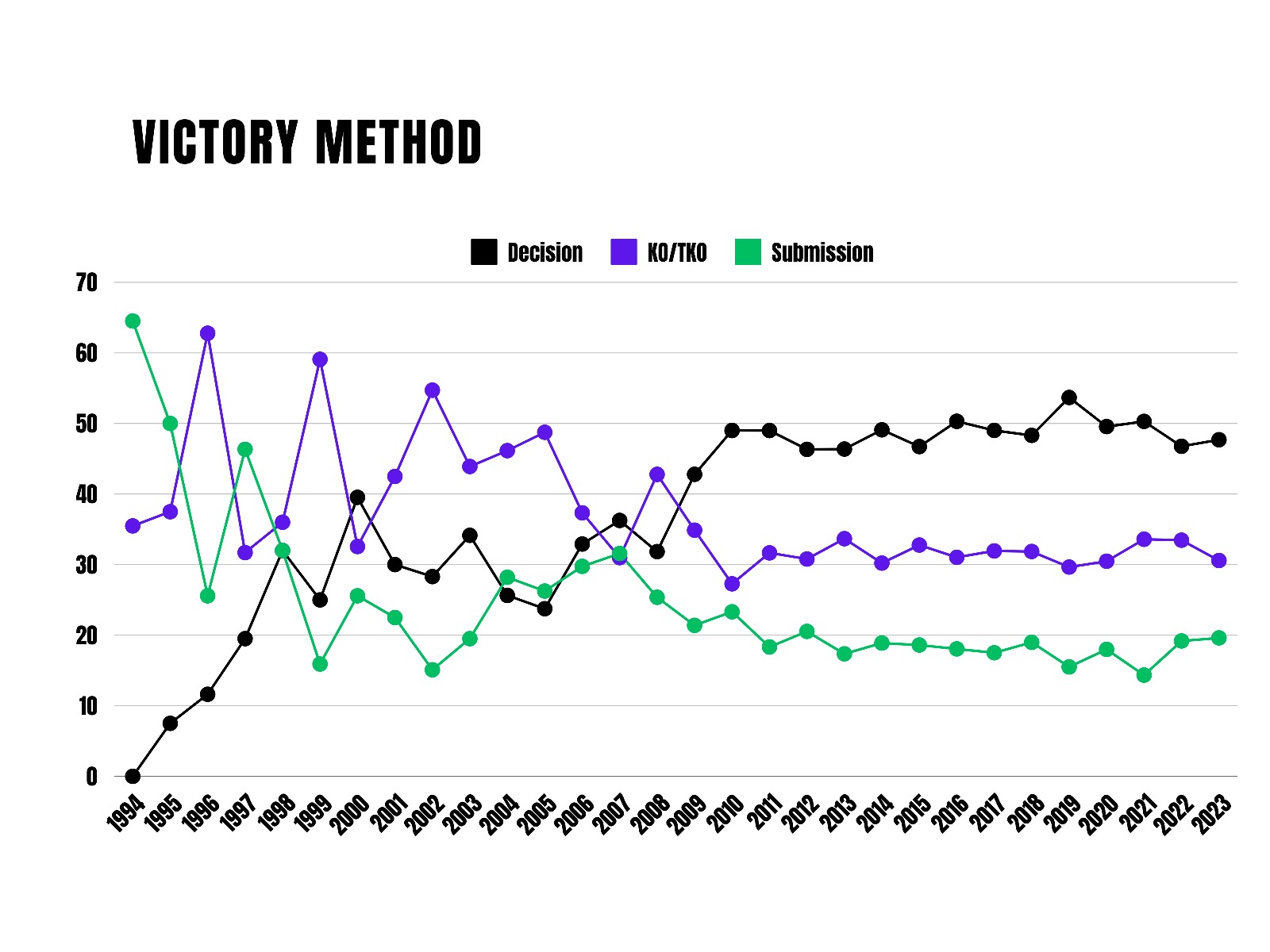
Next, we will look at how fights in the UFC finish. In UFC fight can finish in one of several ways including by Knock Out, Submission, Decision or a handful of other less common ways such as doctor stoppage. Looking at the graph below we can see some interesting insights: The decline of submissions: As per the hope of Rorion Gracie submission were the dominant victory method in the earlier UFC events. However, since then submissions have steadily declined in recent years with only 20% of finishes coming in the way of submission. The increase in decision victories: In the modern era of the UFC more fights now end in decision with roughly 50% of fights ending this way. A possible explanation is that due to more rounded fighters and higher skill levels that come from a more established sport in addition to more even match making. Brawlers’ vs Submission artists: In the earlier ‘brawler years’, submissions and KO seemed to have a cyclical trend where one would be high and the other low. A possible reason for this is the brawler years where often less skilled fighters would rely on KO out power, this would either end in spectacular fashion or with the brawler being subdued on the ground.
Where does the fight take place?
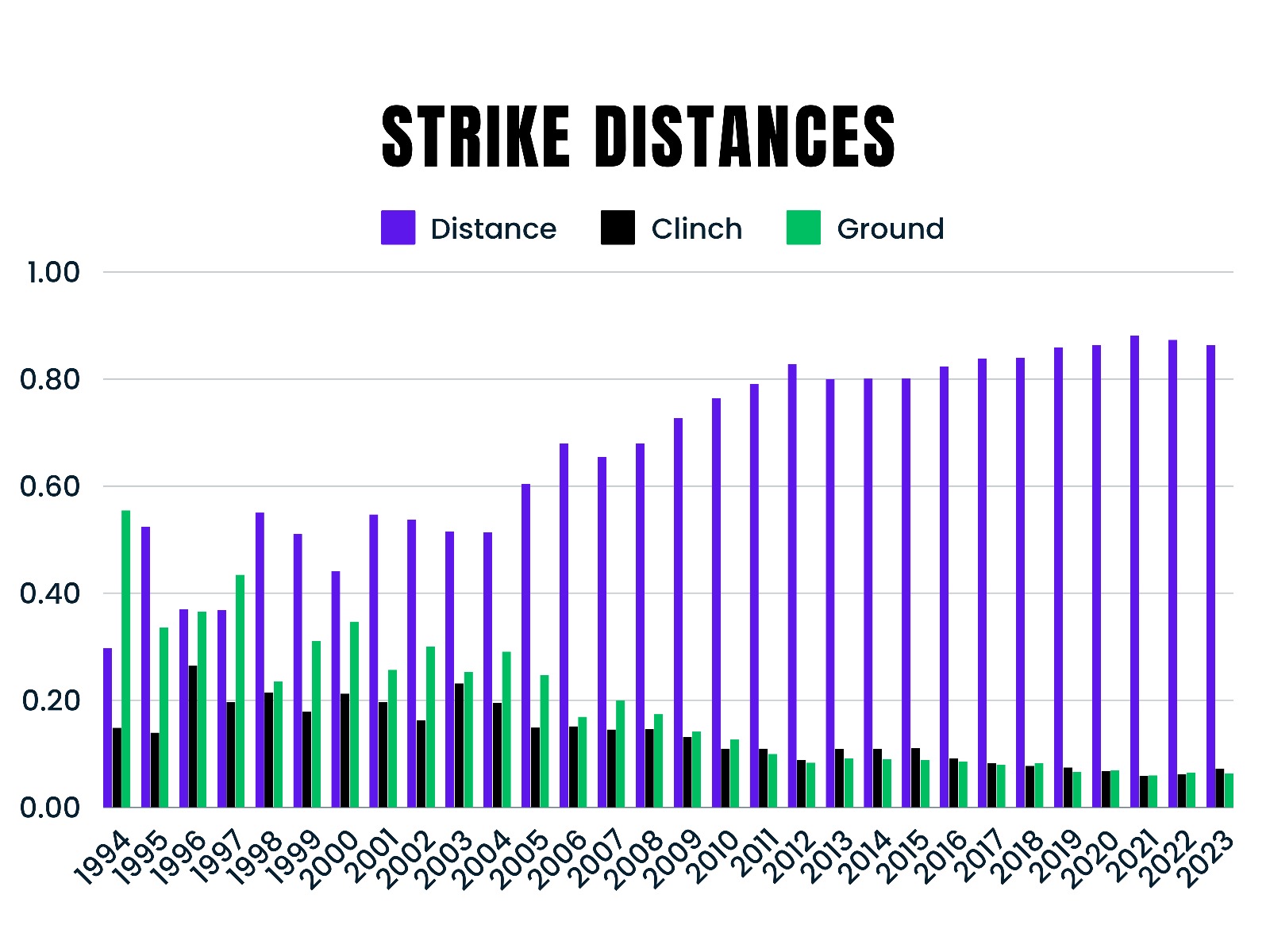
Let take a deeper look at the change in fighting style over the years of the UFC by viewing at what distance fights happen. During a fight, strikes can occur from three different ranges:
- From distance
- From the clinch
- From the ground
Now we understand a little about striking range lets look at what the graph shows us.
Striking from distance: The trend of strikes from distance becoming more popular in UFC fights is clearly illustrated in the accompanying graph, which shows a marked increase in average strikes attempted from a distance over the years. This aligns with the observed decline in submission victories, which were more common in the earlier days of the UFC.
Decline of the clinch: Over the years we can also observe a consistent decrease in clinch striking, suggesting that fighters are increasingly wary of entering the dirty boxing range, likely preferring to engage in safer, more strategic striking exchanges from a distance.
Decline in ground striking: Furthermore, the crowd's preference for standing strikes appears to influence fighters to seek significant strikes from a distance rather than engaging in clinch or ground combat. This strategic shift not only reflects the evolving tactics in the octagon but also underscores the impact of audience preferences on fighting styles.
Striking targets
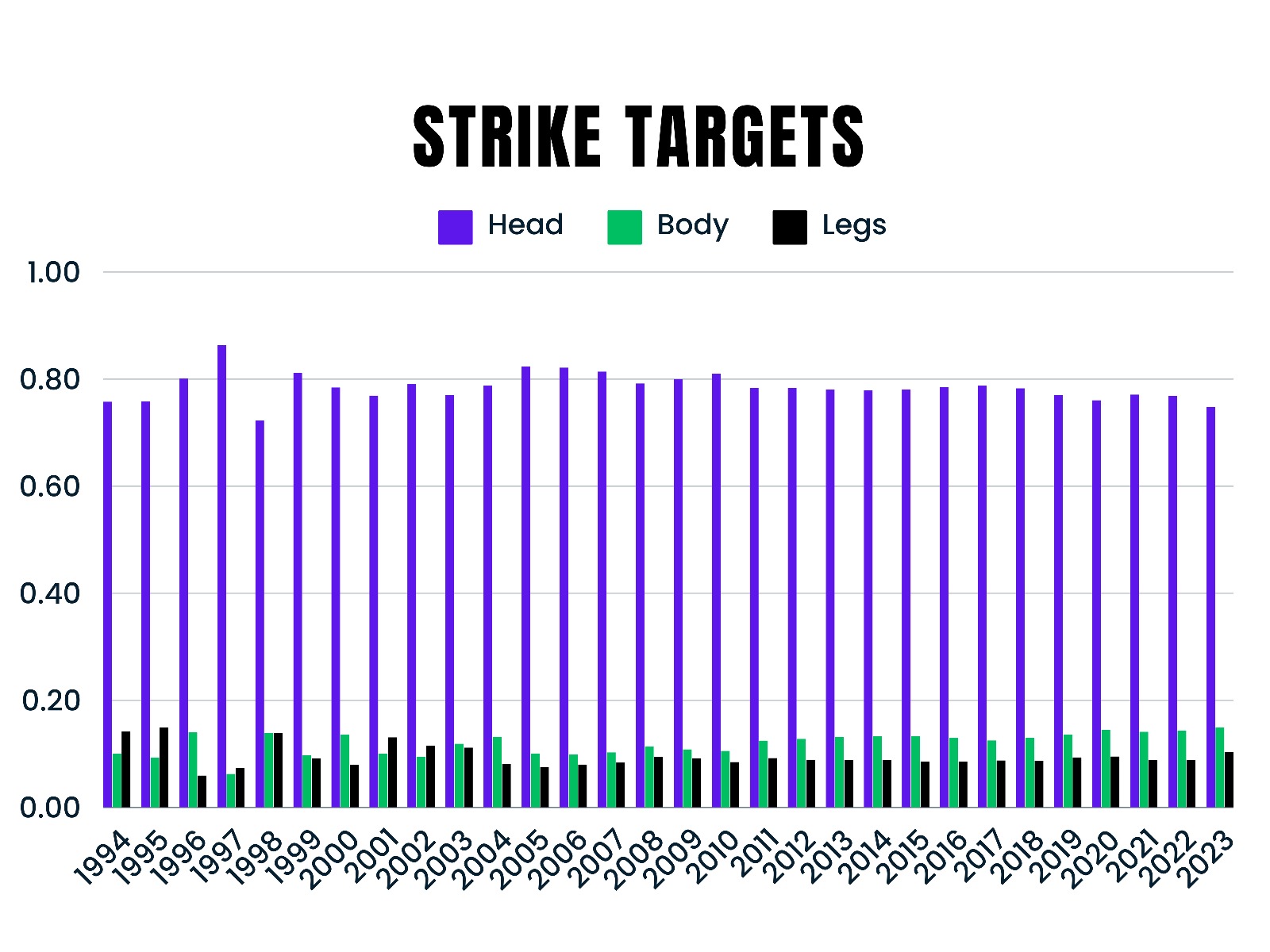
The final area we are going to look at is the change in striking targets over time. No matter the striking distance strikes can be targeted to the head, body or legs. From the graph we can observe the following trends: Head Strikes Dominate: Head strikes have been the number one target for UFC fighters since the inception of the sport. The values suggest that no matter the era that strikes aimed for the head make up roughly 75-80% of the total strikes. Leg Strike a consistent target: Based on the graph, leg strikes have consistently been the least targeted area compared to the head and body from 1994 to 2023. The proportion of leg strikes has remained relatively low and stable over the years, although there have been some fluctuations, the overall trend for leg strikes has not seen significant change. However, it is worth noting that where the strike occurs on the leg may have changed in recent years were fighters now target calf kicks to impede their opponent’s movement and explosiveness. Body strikes on the rise: Body strikes have maintained a relatively low and consistent level compared to head strikes from 1994 to 2023. While they are targeted more frequently than leg strikes, they are still significantly less common. There are minor fluctuations in the proportion of body strikes over the years, but overall, the focus on targeting the body has remained stable and consistently lower than the emphasis on head strikes.
Wrapping up
As we wrap up this inaugural edition of The Sporting Analyst, we hope you've enjoyed this deep dive into the evolution of the UFC. Through data and analytics, we've uncovered the significant trends and transformations that have shaped the sport into what it is today. From the early days of raw, unregulated bouts to the highly strategized and polished fights of the modern era, the UFC's journey is a testament to its dynamic nature and enduring appeal. Stay tuned for more insights and analyses as we continue to explore the fascinating world of mixed martial arts. Whether it's breaking down the latest match statistics or uncovering historical patterns, "Fight Facts" is here to bring you the stories behind the numbers, providing a richer understanding of the sport we all love. Until next time, keep your guard up and your analytics sharp!